Blog
CENTRAL TEACHER ELIGIBILITY TEST (CTET) 2024

CTET is a national-level teaching eligibility examination conducted every year by the Central Board of Secondary Education(CBSE). The CTET 2024 notification for the July cycle has been released by the CBSE on their official website. As mentioned in the notification, the exam will be held on 07 July 2024 in two shifts in offline (pen-paper) mode. 211 centres across the country have been allocated for the exam.
The official website for CTET 2024: ctet.nic.in
WHAT IS CTET?
Central Teacher Eligibility Test(CTET) is a central-level exam conducted for those aspirants who want to be government teachers. The exam is conducted twice a year in the offline mode. The application form and fees for the exam are submitted online.
The exam is conducted to determine the eligibility of candidates for primary and upper primary teaching positions at various government schools. CTET certificate is also required at many private schools. So, a CTET teaching certificate is required for candidates seeking a career in teaching either at a private school or at a government school.
IMPORTANT DATES
- Application start date – 7 March 2024
- Application end date – 5 April 2024
- Last date for fee submission – 5 April 2024
- Exam date – 7 July 2024
- Admit card date – Before Exam
- Result release date – Notified Soon
APPLICATION FEES
For Single Paper
- General / OBC – 1000/-
- SC/ST – 500/-
For Both Paper: Primary and Junior
- General / OBC – 1200/-
- SC/ST – 600/-
AGE LIMIT
- Minimum age – 18 years
- Maximum age – NA
ELIGIBILITY CRITERIA
Candidates have to fulfil the eligibility criteria to write the CTET exam. The candidate must go through the CTET 2024 Eligibility Criteria before filling out the CTET Online application form.
- Candidates should pass 10+2 with a minimum of 50% aggregate marks in order to be qualified as a primary-stage teacher.
- Candidates should clear graduation with a minimum of 50% aggregate marks or 10+2 with at least 50% aggregate marks from a recognized university in order to be qualified for the appointment of a secondary teacher.
- Relaxation up to 5% in the qualifying marks shall be allowed to the candidates belonging to reserved categories, such as SC/ST/OBC/Differently abled.
- Candidates appearing in the final year of a Bachelor’s Degree in Education or Diploma in Elementary Education, etc., are provisionally admitted. Their certificate shall be valid only on passing the aforesaid Examinations, before the declaration of Exam result.
SYLLABUS
Paper I (for classes 1 to V) Primary Stage
- Child Development and Pedagogy
a) Child Development (Primary School Child)
• Concept of development and its relationship with learning.
• Principles of the development of children.
• Influence of Heredity & Environment.
• Socialization processes: Social world & children (Teacher, Parents, Peers).
• Piaget, Kohlberg, and Vygotsky: constructs and critical perspectives.
• Concepts of child-centred and progressive education.
• Critical perspective of the construct of Intelligence.
• Multi-Dimensional Intelligence
• Language & Thought .
• Gender as a social construct; gender roles, gender bias, and educational practice.
• Individual differences among learners, understanding differences based on diversity of language, caste, gender, community, religion, etc.
• Distinction between Assessment for learning and assessment of learning; School-Based Assessment, Continuous & Comprehensive Evaluation: perspective and practice.
• Formulating appropriate questions for assessing the readiness levels of learners; for enhancing learning and critical thinking in the classroom and for assessing learner achievement.
b) Concept of Inclusive education and understanding children with special needs
• Addressing learners from diverse backgrounds including disadvantaged and deprived.
• Addressing the needs of children with learning difficulties, impairment, etc.
• Addressing the Talented, Creative, Specially abled Learners.
c) Learning and Pedagogy
• How children think and learn; how and why children fail to achieve success in school performance.
• Basic processes of teaching and learning; children’s strategies of learning; learning as a social activity; social context of learning.
• Child as a problem solver and a scientific investigator.
• Alternative conceptions of learning in children, understanding children’s errors as significant steps in the learning process.
• Cognition & Emotions.
• Motivation and learning.
• Factors contributing to learning – personal & environmental.
• Language I
a)Language Comprehension
• Reading unseen passages – two passages one prose or drama and one poem with questions on comprehension, inference, grammar, and verbal ability (Prose passage may be literary, scientific, narrative, or discursive).
b) Pedagogy of Language Development
• Learning and acquisition.
• Principles of language Teaching.
• Role of listening and speaking; function of language and how children use it as a tool.
• Critical perspective on the role of grammar in learning a language for communicating ideas verbally and in written form.
• Challenges of teaching language in a diverse classroom; language difficulties, errors, and disorders.
• Language Skills.
• Evaluating language comprehension and proficiency: speaking, listening, reading, and writing.
• Teaching- learning materials: Textbook, multi-media materials, multilingual resources of the classroom.
• Remedial Teaching.
• Language -II
a) Comprehension
• Two unseen prose passages (discursive or literary or narrative or scientific) with questions on comprehension, grammar, and verbal ability.
b) Pedagogy and Language Development
• Learning and acquisition.
• Principles of language Teaching.
• Role of listening and speaking; function of language and how children use it as a tool.
• Critical perspective on the role of grammar in learning a language for communicating ideas verbally and in written form.
• Challenges of teaching language in a diverse classroom; language difficulties, errors, and disorders.
• Language Skills.
• Evaluating language comprehension and proficiency: speaking, listening, reading, and writing.
• Teaching – learning materials: Textbook, multi-media materials, multilingual resources in the classroom.
• Remedial Teaching.
• Mathematics
a) Content
• Geometry
• Shapes & Spatial Understanding
• Solids around Us
• Numbers
• Addition and Subtraction
• Multiplication
• Division
• Measurement
• Weight
• Time
• Volume
• Data Handling
• Patterns
• Money
b) Pedagogical issues
• Nature of Mathematics/Logical thinking; understanding children’s thinking and reasoning patterns and strategies for making meaning and learning.
• Place of Mathematics in Curriculum.
• Language of Mathematics.
• Community Mathematics.
• Evaluation through formal and informal methods.
• Problems of Teaching.
• Error analysis and related aspects of learning and teaching.
• Diagnostic and Remedial Teaching.
• Environmental Studies
a) Content
- Family and Friends: Relationships Work and Play Animals Plants
- Food
- Shelter
- Water
- Travel
- Things We Make and Do
b) Pedagogical Issues
• Concept and scope of EVS
• Significance of EVS, integrated EVS
• Environmental Studies & Environmental Education
• Learning Principles
• Scope & relation to Science & Social Science
• Approaches of presenting concepts
• Activities
• Experimentation/Practical Work
• Discussion
• CCE
• Teaching material/Aids
• Problems
Paper II (for classes VI to VIII) Elementary Stage
I. Child Development and Pedagogy
a) Child Development (Elementary School Child)
• Concept of development and its relationship with learning.
• Principles of the development of children.
• Influence of Heredity & Environment.
• Socialization processes: Social world & children (Teacher, Parents, Peers).
• Piaget, Kohlberg, and Vygotsky: constructs and critical perspectives.
• Concepts of child-centred and progressive education.
• Critical perspective of the construct of Intelligence.
• Multi-Dimensional Intelligence.
• Language & Thought.
• Gender as a social construct; gender roles, gender bias, and educational practice.
• Individual differences among learners, understanding differences based on diversity: language, caste, gender, community, religion, etc.
• Distinction between Assessment for learning and assessment of learning; School-Based Assessment, Continuous & Comprehensive Evaluation: perspective and practice.
• Formulating appropriate questions for assessing the readiness levels of learners; for enhancing learning and critical thinking in the classroom and for assessing learner achievement.
b) Concept of Inclusive education and understanding children with special needs
• Addressing learners from diverse backgrounds including disadvantaged and deprived.
• Addressing the needs of children with learning difficulties, impairment, etc.
• Addressing the Talented, Creative, Specially abled Learners
c) Learning and Pedagogy
• How children think and learn; how and why children fail to achieve success in school performance.
• Basic processes of teaching and learning; children’s strategies of learning; learning as a social activity; social context of learning.
• Child as a problem solver and a scientific investigator.
• Alternative conceptions of learning in children, understanding children’s errors as significant steps in the learning process.
• Cognition & Emotions.
• Motivation and learning.
• Factors contributing to learning – personal & environmental.
II. Language I
a) Language Comprehension
Reading unseen passages – two passages one prose or drama and one poem with questions on comprehension, inference, grammar, and verbal ability (Prose passage may be literary, scientific, narrative, or discursive).
b) Pedagogy of Language Development
• Learning and acquisition.
• Principles of language Teaching.
• Role of listening and speaking; function of language and how children use it.
• IT as a tool.
• Critical perspective on the role of grammar in learning a language for communicating ideas verbally and in written form.
• Challenges of teaching language in a diverse classroom; language difficulties, errors, and disorders.
• Language Skills.
• Evaluating language comprehension and proficiency: speaking, listening, reading, and writing.
• Teaching- learning materials: Textbook, multi-media materials, multilingual resources in the classroom.
• Remedial Teaching.
III. Language-II
a) Comprehension
• Two unseen prose passages (discursive or literary or narrative or scientific) with questions on comprehension, grammar, and verbal ability
b) Pedagogy of Language Development
• Learning and acquisition
• Principles of language Teaching
• Role of listening and speaking; function of language and how children use it as a tool.
• Critical perspective on the role of grammar in learning a language for communicating ideas verbally and in written form.
• Challenges of teaching language in a diverse classroom; language difficulties, errors, and disorders.
• Language Skills
• Evaluating language comprehension and proficiency: speaking, listening, reading, and writing.
• Teaching – learning materials: Textbook, multi-media materials, multilingual resources of the classroom.
• Remedial Teaching
IV. Mathematics and Science
i) Mathematics
a) Content
Number System
• Knowing our Numbers
• Playing with Numbers
• Whole Numbers
• Negative Numbers and Integers
• Fractions
Algebra
- Introduction to Algebra
- Ratio and Proportion
Geometry
- Basic geometrical ideas (2-D)
- Understanding Elementary Shapes (2-D and 3-D)
- Symmetry: (reflection)
- Construction (using Straight edge Scale, protractor, compasses)
- Mensuration
- Data handling
b) Pedagogical issues
• Nature of Mathematics/Logical thinking
• Place of Mathematics in Curriculum
• Language of Mathematics
• Community Mathematics
• Evaluation
• Remedial Teaching
• Problem of Teaching
ii)Science a) Content
1. Food
• Sources of food
• Components of food
• Cleaning food
2. Materials
• Materials of daily use
3. The World of the Living
4. Moving Things People and Ideas
5. How things work
• Electric current and circuits
• Magnets
6. Natural Phenomena
7. Natural Resources
b) Pedagogical issues
• Nature & Structure of Sciences
• Natural Science/Aims & objectives
• Understanding & Appreciating Science
• Approaches/Integrated Approach
• Observation/Experiment/Discovery (Method of Science)
• Innovation
• Text Material/Aids
• Evaluation – cognitive/psychomotor/affective
• Problems
• Remedial Teaching
V. Social Studies/Social Sciences
a) Content
1. History
• When, Where, and How
• The Earliest Societies
• The First Farmers and Herders
• The First Cities
• Early States
• New Ideas
• The First Empire
• Contacts with Distant lands
• Political Developments
• Culture and Science
• New Kings and Kingdoms
• Sultans of Delhi
• Architecture
• Creation of an Empire
• Social Change
• Regional Cultures
• The Establishment of the Company Power
• Rural Life and Society
• Colonialism and Tribal Societies
• The Revolt of 1857-58
• Women and reform
• Challenging the Caste System
• The Nationalist Movement
• India After Independence
2. Geography
• Geography as a social study and as a science
• Planet: Earth in the solar system
• Globe
• Environment in its totality: natural and human environment
• Air
• Water
• Human Environment: settlement, transport, and communication
• Resources: Types – Natural and Human
• Agriculture
3. Social and Political Life
• Diversity
• Government
• Local Government
• Making a Living
• Democracy
• State Government
• Understanding Media
• Unpacking Gender
• The Constitution
• Parliamentary Government
• The Judiciary
• Social Justice and the Marginalised
b) Pedagogical issues
• Concept & Nature of Social Science/Social Studies
• Class Room Processes, activities, and discourse
• Developing Critical thinking
• Enquiry/Empirical Evidence
• Problems of teaching Social Science/Social Studies
• Sources – Primary & Secondary
• Projects Work
• Evaluation
EXAM PATTERN
The CTET exam will be conducted in offline (pen-paper) mode in two shifts. Candidates who are eligible and appearing in the CTET 2024 exam must be aware of the exam pattern for the 2024 exam. The two shifts of the CTET 2024 are Paper-1 and Paper-2.
The Paper-1 exam is divided into 5 sections.
| CTET Paper 1 Exam Pattern | |||
| Subject | No. of Questions | Marks | Duration |
| Child Development and Pedagogy | 30 | 30 | 2.5 Hours |
| Language I (compulsory) | 30 | 30 | |
| Language II (compulsory) | 30 | 30 | |
| Mathematics | 30 | 30 | |
| Environmental Studies | 30 | 30 | |
| Total | 150 | 150 | |
The Paper-2 exam is divided into 4 sections. Candidates have to choose between Mathematics & Science and Social Studies in Paper 2.
| CTET Paper 2 Exam Pattern | |||
| Subject | No. of Questions | Marks | Duration |
| Child Development and Pedagogy | 30 | 30 | 2.5 Hours |
| Language I (compulsory) | 30 | 30 | |
| Language II (compulsory) | 30 | 30 | |
| A. Mathematics & Science | 30+30 | 60 | |
| B. Social Studies & Social Science | 60 | 60 | |
| Total | 210 | 210 | |
Note that there is no mark deduction i.e. no negative marking for the wrong answer in CTET 2024 exam.
Preparation from the OMR Sheet for the exam
Get the eVidya OMR answer sheet for practising before the exam so as to give the error-free exam at the final time.
- Candidates can easily fill the OMR sheet in the given time, and candidates learn the appropriate way of filling the OMR Sheet.
- If a candidate practices the filling of the OMR sheet regularly, then the chances of making a mistake in an exam would be less.
CTET OMR Sheet is to be filled up appropriately to avoid any hindrances at the time of its submission. The practice of the OMR sheet is very important, and it needs to be done again & again.
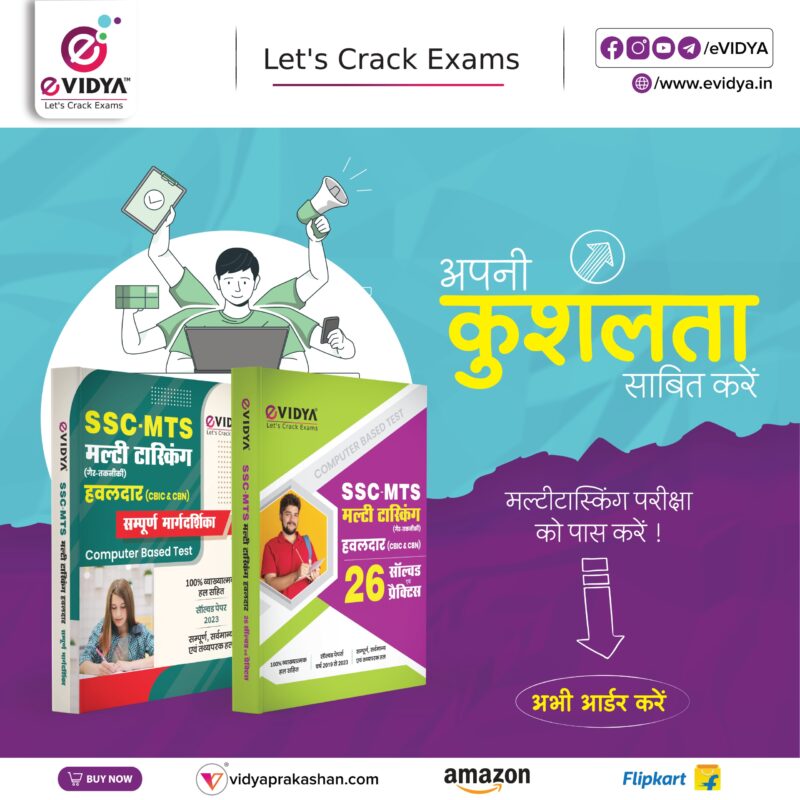
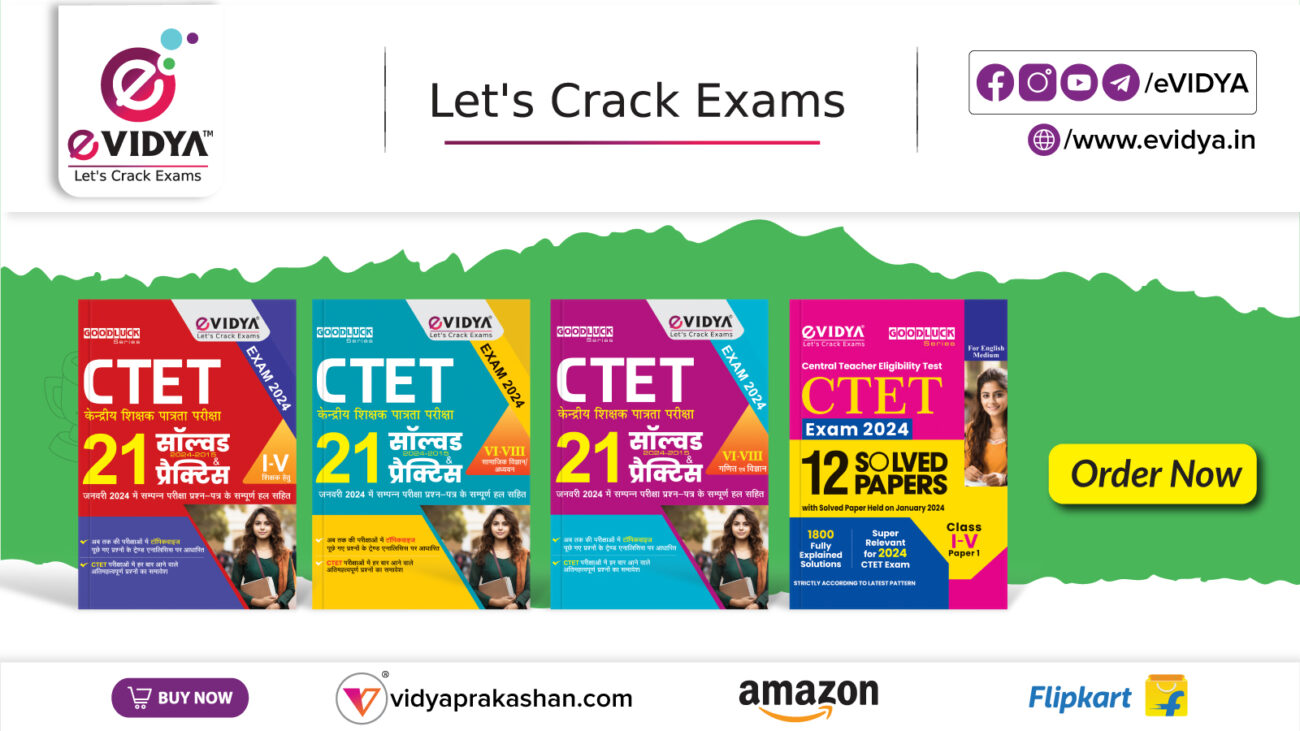
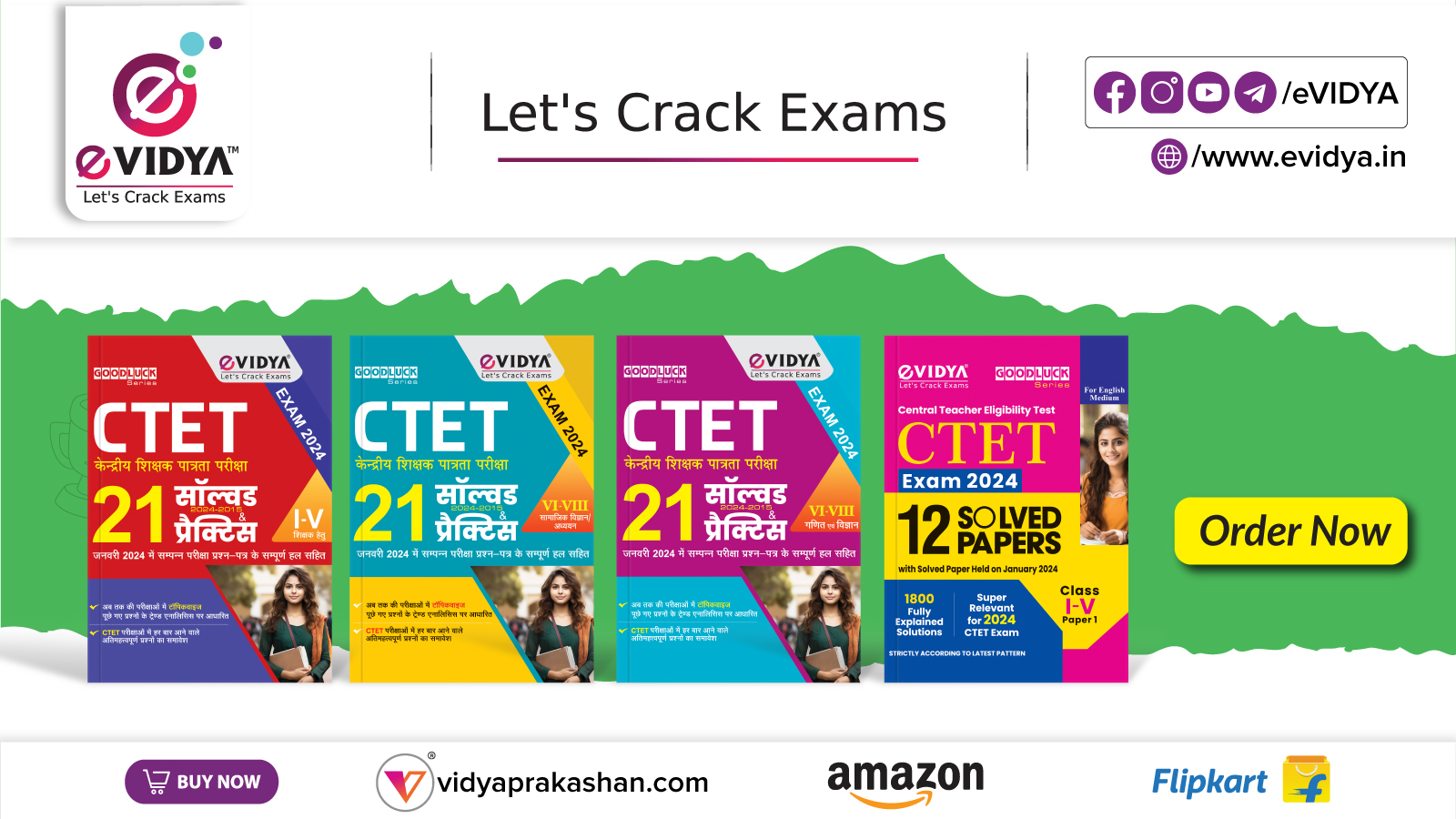
eVidya books to prepare for your CTET exam to get the result of flying colours for your leading career. Online links to order the books are given below.
| Books | Amazon | Flipkart |
| eVidya CTET CBT 2024 (VI-VIII) Maths & Science 23 Solved Papers & Practice Sets | https://amzn.to/4aB0hkw | https://bit.ly/3J2Ht1Y |
| eVidya CTET 21 Solved (2024-2015) & Practice Papers for Class 6 to 8 | https://bit.ly/3TLSbyR | https://bit.ly/3vOYUjs |
| eVidya CTET 21 Solved Practice Papers for Class 6 to 8 Maths&Science Entrance Exam 2024 | https://bit.ly/43OvDCm | https://bit.ly/49nHVCw |
| EVidya CTET CBT Class (1 To 5) 23 Solved & Practice Sets for CTET Exam 2024 | https://bit.ly/441uGqt | https://bit.ly/43JtJTk |
| eVidya CTET CBT (VI-VIII) Social Science & Study 23 Solved Papers & Practice Sets for CTET Entrance Exam 2024 | https://bit.ly/43Jfo9k | https://bit.ly/3vGgy9i |
| CTET-CBT 23 Solved Papers & Practice Sets (ClassVI-VIII Study & Social Science) for 2024 CTET Entrance Exam | https://bit.ly/3VKrMnx | https://bit.ly/3PQ6OjA |
| CTET Class VI to VIII Ganith avum Vigyan 23 Solved Papers & Practice Sets for CTET Entrance Exam 2024 – Free OMR Sheets for Practicing | https://bit.ly/49nexwk | https://bit.ly/43NwS4o |
More links to reach us out for any query
Our Amazon Store – https://amzn.to/3PFNp4K
Facebook – https://bit.ly/3WdWMKk
Instagram – https://bit.ly/3WdMGJ7
LinkedIn – https://www.linkedin.com/company/evidyaindia/
Telegram – https://bit.ly/3hGbc6V
Youtube – https://bit.ly/3hEki4b
eVidya Application – https://bit.ly/3HSYlJ3